Team
Principal Investigators (PIs)

Claire Lauer is a professor of technical communication, co-director of the user experience master's program, and the User Experience Architect for the Arizona Water Innovation Initiative. She advances research-driven approaches to engagement, and provides guidance to project teams on how to create intuitive user experiences that encourage user adoption, retention, and action regarding water and drought in Arizona.

Liliana Caughman is a scholar, community partner, and educator working at the frontlines of environmental and social transformation, rooted in relationalities, culture, and identity. Dr. Caughman has been focused on RiverBot, an innovative AI learning technology that embodies relational and decolonial approaches to knowledge.

Mina Johnson is a Director and Research Professor at Arizona State University. She works with lab students and professional studios to create award-winning XR content. XR stands for eXtended Realities – the spectrum that includes augmented reality (AR), mixed reality (MR), and virtual reality (VR). With the Arizona Water Innovation Initiative, she is leading the research and development of the "Being Water" Mixed Reality game.

Scotty Craig is an associate professor of human systems engineering within The Polytechnic School of the Ira A. Fulton Schools of Engineering at Arizona State University. Dr. Craig serves as the ASU Learning Engineering Institute's Director, Research and Evaluation and as Director of the ASU Advanced Distributed Learning Initiative Partnership Lab. Dr. Craig is a learning engineer with expertise in cognitive science, design science, and the science of learning (specifically learning technology).
Staff

Ketevan Chachkhiani is a Research Analyst with the Arizona Water Innovation Initiative at Arizona State University. Drawing on her doctoral training in educational policy and evaluation, she leads cross-project data management and contributes to research on how immersive and interactive technologies influence cognitive, behavioral, and learning-related outcomes. Her work includes evidence synthesis, instrument development, and quantitative analysis to inform the design and optimal implementation of emerging technologies in water-related contexts.
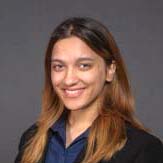
Poorva Ketkar is a UX Researcher with the Arizona Water Innovation Initiative at Arizona State University. She leads mixed-methods research and usability testing across educational games, immersive VR experiences, and AI chatbots, translating user insights into accessible, engaging tools. Her work bridges storytelling and emerging technologies to design inclusive water education experiences that build understanding, trust, and community engagement.

Amber Hedquist is a Research Specialist with the Arizona Water Innovation Initiative at Arizona State University and PhD Candidate in English. She contributes to community-engaged research and collaborative design efforts, emphasizing reflective and inclusive research practices. She also supports and scaffolds the team's academic writing and publication work.

Danielle Storey is an User Experience Researcher at the Arizona Water Innovation Initiative (AWII) at Arizona State University, where she uses mixed methods research to design intuitive, accessible, and engaging experiences that support water professionals, inform the public, and strengthen water decision-making across Arizona. She blends research, visual design, and storytelling to create impactful digital experiences. Her work examines and emphasizes the human side of products, making them desirable, engaging, and useful for people.
Contributors

Sophia Baia is a PhD student in Cognitive Science at Arizona State University where she primarily studies perceptual illusions, the perception-action system, and embodied learning in STEM. As a Graduate Research Assistant on the Arizona Water Innovation Initiative, she primarily contributes to the coding and analysis of community interviews and exhibit and learning evaluation.

Purvaja Borkar is a Master's student in User Experience and a Graduate Research Assistant with the Arizona Water Innovation Initiative at Arizona State University. She contributes to the team through user-centered visual design, developing graphics and digital assets that translate complex water data and research into intuitive, engaging experiences. Her work integrates UX principles, information design, and visual storytelling to enhance clarity, accessibility, and impact across AWII initiatives.

Stephen Carradini is an Associate Professor of technical communication at Arizona State University and creator of the Arizona Water Chatbot (AZWaterbot.org), a public information AI tool focused on water management and conservation.
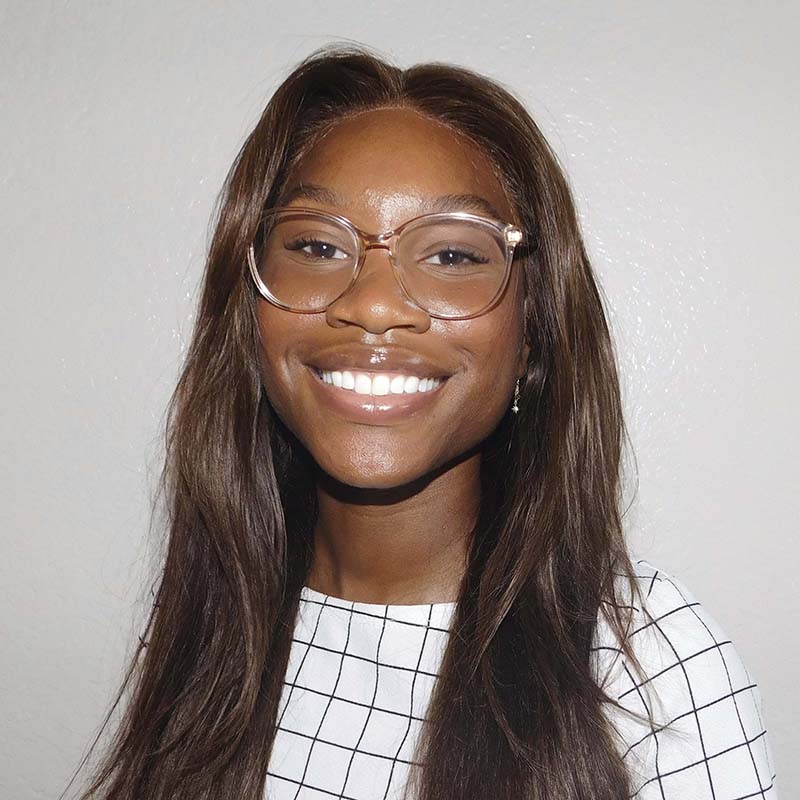
Nia-Renee Cooper is a Graduate Student in Human Systems Engineering and Graduate Research Associate with the Arizona Water Innovation Initiative at Arizona State University. She contributes to evaluation efforts, game design for the Mixed-Reality game, "Being Water," and research and development across projects.

Kathryn Lambrecht is a professor of Technical Communication at Arizona State University. Her research focuses on risk and visual communication, particularly extreme heat communication, weather hazard visualization, and health risk outreach.
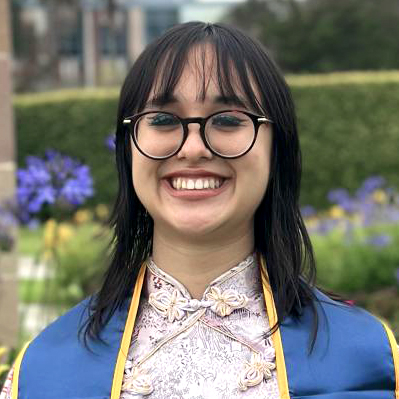
Emily Machniak is a Human Systems Engineering PhD student at Arizona State University, where she is interested in how cognitive processes, particularly attention, translate from controlled laboratory settings to real-world environments. She is also a Graduate Student Research Assistant for the Arizona Water Innovation Initiative, contributing to the design and testing efforts of mixed-reality sustainability experiences and user-centered environmental communication.

Natalie Parra Miguel (They/She) is an undergraduate Research Aide with the Arizona Water Innovation Initiative at Arizona State University. As part of the Relate Lab and Earth System Science of Anthropocene (ESSA), they research Indigenous Water Stories, specifically how native communities relate to water.
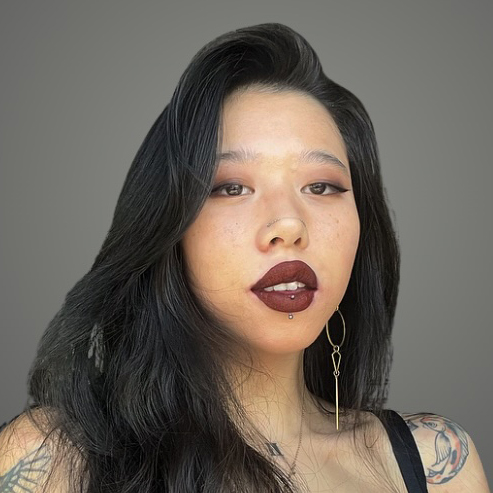
Emma Noble is a graduate research associate with the Arizona Water Innovation Initiative and a PhD student in the Writing, Rhetorics, and Literacies program at Arizona State University. As an interdisciplinary rhetorical scholar, she uses GIS and tropological analysis to explore the rhetoric of natural resource allocation.

Srinivasan Ravichandran is a doctoral student in Human-Computer Interaction at Arizona State University with 6+ years of experience in mixed-methods UX research spanning across industry and academic settings. He currently serves as a Graduate Research Associate with the CRUX lab at ASU, leading research across environmental dashboards, conversational AI, and VR experiences using eye-tracking, task analysis, usability testing, and experimental methods to improve comprehension, engagement, and interface usability for public-facing systems. Previously at Zoho Corporation, he led end-to-end UX research and content operations across multiple SaaS products.
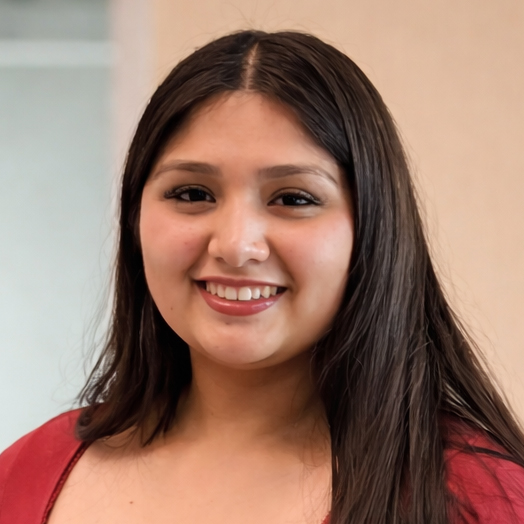
Tallia Robledo is an Undergraduate Research Student Aid with the Arizona Water Innovation Initiative.

Vriddhi Jigar Shah is a UI/UX Designer and Software Engineering master's student at Arizona State University, She contributes to the design, research, and development of Arizona Water Innovation Initiative projects and supports the ongoing work of the REAL Water project.

Anqi Shao is a Postdoctoral Research Scholar with the Arizona Water Innovation Initiative at Arizona State University. Anqi serves as the tech lead and outreach specialist for azwaterbot.org and work at the intersection of AI and environmental communication. Anqi's research focuses on human-AI communication and public engagement with science by developing AI-powered public information tools and translating water information into accessible, community-facing resources.